Ana Marie Cox, Wonkette/Guardian columnist/MSNBC contributor, part II

anamariecox-mug1

We continue our conversation with Ana Marie Cox, a founding editor at Wonkette who’s now a political columnist at The Guardian, in the second-part of this two-part episode (check out the first part here). In this edition, we talk about whether she had to maintain the persona she originally brought to Wonkette once she moved on from the website, if and when male and female journalists will ever be on equal ground when it comes to how readers view them in social media, and how the divisiveness in sports compares to the divisiveness in politics.

Plus, we talk about whether covering politics is akin to covering pro wrestling, and just how in the hell does Cox have more than 1.3 million Twitter followers?


Interviewed on 1-21-14


A quick note:
The audio isn’t so good in the first couple minutes of the podcast. Stay with me, it gets better.

Another quick note:
This was recorded before former Missouri defensive end Michael Sam announced that he’s gay.

Ana Marie Cox, Wonkette/Guardian columnist/MSNBC contributor

anamariecox-tattoo1

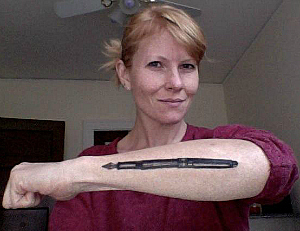
Ana Marie Cox, a founding editor at Wonkette who’s now a political columnist at The Guardian, is probably the biggest journalism star we’ve had on the podcast. To celebrate, we divided this episode into two parts. In part one this week, we talk about the pen that’s tattooed on her forearm and what it means to her, why television punditry is a strange business, and how she went from suck.com to becoming one of the biggest political reporting stars in this country.

Plus, we discuss the infamous Washingtonienne story, how Cox as Wonkette handled it, and how she had become powerful enough as a journalist to have the access to land a story like that.

Interviewed on 1-21-14

John Walters, Newsweek sports writer/Mediumhappy.com/steakateria aficionado

john-walters-mug

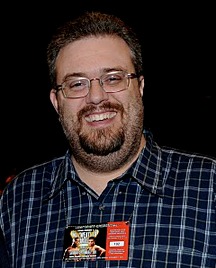
One of the reasons I started following John Walters on Twitter — maybe the main reason — is because I loved that this former Sports Illustrated writer was tweeting about how he was waiting tables at a New York City steakhouse. Well, Walters has accomplished much more in his life than serving food for a big-ass tip. Instead, the two-time Sports Emmy winner recently landed a job at Newsweek, and he still writes daily for his own site, HappyMedium.com.

During our chat, we discuss how much easier it is to get interviews or call-backs from people when they know ESPN.com or the New York Times is calling and the cache those publications bring, what it was like clawing his way up from the bottom at Sports Illustrated, and why the iPad-only newspaper — The Daily — was a little ahead of its time.

Plus, we talk about his feelings on SI’s Oklahoma State college football story that caused such a controversy last September, and Walters tells me about why he went into the restaurant business as a waiter and why he loves it so much.

Interviewed on Jan. 16, 2014

Snow day, the Olympics and a glass of cranberry juice

Feb. 7, 2014 (2:14 a.m.): Yesterday, my kids, for some reason, wanted a glass of cranberry juice. I’m not sure they’ve ever had cranberry juice before, but they saw their mother drinking it and I guess they wanted to give it a shot. It’s not great cranberry juice. At least not the kind a kid would like. It’s low calorie and low sugar, and every time I fill a small juice glass thinking that I’d enjoy its tanginess, I’m reminded that I don’t care for this particular brand.

Today, school is out. Not because there are eight inches of snow and because black ice dastardly disguises itself against the asphalt, waiting for the next set of rubber tires to appear. No, it’s just cold in Austin with maybe a few slick roads here and there. But the kids should be in school and I should be hacking away at my long list of chores. But they’re not, so I’m not. It’s a day to curl up on the couch and not worry so much about the outside world.

Later today, the Sochi Olympics opening Cceremony will be shown via tape delay on NBC. Proud flag-bearers will lead proud contingents of athletes from countries around the globe. Some believe Sochi will be a disastrous Olympic games, with fears of security, black widows, bathrooms that don’t work, and showers that don’t contain the water that might be too dangerous to use on your face anyway. Others believe the Olympic spirit will triumph, the same as it always does.

Four years ago, my wife poured herself a glass of cranberry juice and walked her 27-week pregnant belly over to the couch. It was cold outside; we were snowed inside our Cincinnati townhouse. We had nothing to do but to turn on the TV, fire up the DVR, curl up together on the couch. And watch the opening ceremonies of the Vancouver Olympic games.

Soon after we settled in, she went into labor. The comfort of the house would soon be replaced by freezing temperatures and a cold hospital. The images of those smiling, happy athletes would disappear from my screen, never to be played again on that TV. The cranberry juice would sit by itself on a coaster in the living room for the next 24 hours.

I was on my way to bed late last night when those three points of the triangle presented themselves to me — the cranberry juice, the icy roads and the Winter Olympics.

Life doesn’t get much more helpless than that moment four years ago. When labor begins and you have to slalom yourself on icy roads, praying to god that nobody is on the blind side of that intersection because red light or nto, you’re speeding through it like a bobsledding gold medal depends on it.

The babies came 2 1/2 months early that week, and life forever changed.

There must have been some point four years ago when, as a father, flushed with worry about the health and well-being of my premature twins, I allowed myself to drift into the future. “I wonder where we’ll be the next time the Winter Olympics begin,” I vaguely remember asking myself. “Will we be safe and happy? Will the scary moments of February 2010 be a distant dream that somehow ceases to seem real? What will life be like?”

Maybe one day I’ll talk to my children about my emotions. Or maybe they’ll just read the writings I’ve produced for them every so often in the past 48 months that described my fears and hopes for them and the dreams and anxieties I felt for myself.

Like my wife so many moments ago, my daughter didn’t finish her cranberry juice last night either. She spilled most of it on the floor, and like parents do, we muttered to ourselves and procured a paper towel to clean it up before the stain could set. My son asked for more, and I poured him another round.

Eventually, the preschool announced that classes had been canceled and I grumbled to myself because I, originally, had set aside today as time for running errands and paying taxes and filing papers and changing light bulbs.
But I know how very lucky we are, and I know that the past four years, we’ve built memories I couldn’t have dreamed about before I knew what it was to be a father.

My son didn’t finish his second serving of cranberry juice either. As my wife got the children ready for bed last night, I finished cleaning the kitchen from dinner. I put all the plates in the dishwasher, wiped off the counters, vacuumed up all the crumbs. Before I went upstairs, though, I spied his unfinished cranberry juice.
I doubled back to collect the plastic cup, and without thinking about it, I took the juice and poured it down the drain.

Dorie Turner Nolt, press secretary of the US Dept. of Education/former AP reporter

dorie-turner-nolt-mug1

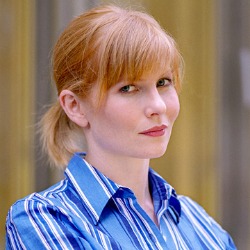
I’ve always known Dorie Turner Nolt as a journalist, and her credentials were impressive. But when she took a job as the press secretary at the U.S. Department of Education, I knew I needed her as a guest on the podcast. In our chat, we talk about the consequences of a journalist going to the “dark side” world of public relations, how she views a reporter’s job now that her paradigm has shifted, how the Associated Press (her former employer) has adjusted to a new age of journalism, and why she would uproot her life for a job she knows she’s not going to have in three years after the current presidential administration leaves office.

Plus, you need to hear her story on how she became the Chattanooga Times Free Press’ 9/11 reporter as a 22-year-old fresh out of college. Frankly, Turner provides one of the best stories we’ve ever heard on this podcast.

And at the end, I couldn’t help but tell my shaking-hands-with-George-W-Bush story that gets a little explicit at the end (and not because of anything President Bush did).

Interviewed on 1-10-14

Dan Rafael, ESPN.com boxing writer

dan-rafael-mug1

I read ESPN.com’s Dan Rafael all the time, and if you follow boxing in the slightest, I’m sure you do the same. Rafael is at all the big fights, conducts epic chats that have gone as long as the common work day and breaks a tremendous amount of news. In our talk, we discuss the media coverage that boxing gets these days (hint: it doesn’t get nearly the mainstream coverage it once did, but it’s probably easier to find boxing news than ever before) and how he created his own world (not unlike T.J. Simers) with his ESPN.com boxing chats. We also hit on how he goes about trying to “own” his beat, and whether he has misgivings about making his living writing about men who hit each other in the head.

Plus, we talk about the time we briefly shared space in a hotel suite in Louisville with Mike Tyson — one of the most surreal moments of my sports writing career and one of my most favorite stories of all time.


Interviewed on 12-19-13

Claire Smith, Journalistic trailblazer/ESPN.com editor

claire-smith-mug1

This might be the most important podcast I’ve recorded to date. Claire Smith, formerly of the New York Times and currently of ESPN.com, is a trailblazer in our journalism world. In the 1970s and 1980s, she was one of the first female reporters to enter a baseball clubhouse, and she had to traverse a rocky road to do her job at the time. During our discussion, we chat about the recent ESPN documentary “Let Them Wear Towels” and why it was so important, the fine line she had to walk between sticking up for herself and not becoming part of an explosive story, and whether female reporters will ever get 100 percent equal treatment.

Plus, you MUST hear the story of how she was physically removed from the Padres clubhouse during the playoffs in 1984 and how that incident shaped her then and how it continues to shape her. It is an amazing tale, and quite frankly, Smith is an amazing (and brave) journalist.

A few days ago, Smith tweeted this to me:

Of course, she’s got it wrong. It was me who was honored to have her grace my podcast.

My favorite quote came when she was discussing her trailblazing colleagues, who paved the way for those who came afterward: “Being able to pick up the phone and talk to Jane Gross, or Melissa Ludtke or Lisa Olson, that made the world then. It means even more now. I look around the group and all I see are survivors and some of the greatest people I’ve ever known in my life.”

Interviewed on 12-19-13

Chris Huston, Heismanpundit.com

chris-huston-mug1

Chris Huston is the foremost authority on the Heisman Trophy. At least that’s what Sports Illustrated says, and there’s no reason not to believe it. Huston gets the winner right every time. Every single damn time.

In our discussion, we talk about why the Heisman Trust is so against Heisman voters revealing their votes before the ceremony and whether that should be a problem for the journalists who are voting, how Huston transformed himself into a top-notch Heisman voter analyst, and the process by which a school’s PR department figures out when to push one of its own football players for the award.

Interviewed on 12-18

Josh Sneed, stand-up comedian

josh-sneed-mug1

Josh Sneed is one of the funniest guys I know. Which is good, because he makes his living as a stand-up comedian. I’m fascinated by the art of comedy, so I was really excited to book Sneed for a chat. In our talk, we discuss the career ambition of a comedian who has a family and doesn’t live on either coast, how he went from working as a systems analyst for Procter & Gamble to starring in his own half-hour special on Comedy Central, and Sneed’s process for writing jokes and bits.

Plus, Sneed tells us the emotional story of his two tryouts for Last Comic Standing and how a conversation with Drew Carey a decade ago continues to inspire him.

Here are a few clips of Sneed on the stage, and here’s the story I ended up writing for Soapbox Media during that trip to Louisville I took with Sneed, Jenny and Jack Sneed.


Interviewed on 12-5-13

Steve Elling, golf/tennis writer, The National newspaper (United Arab Emirates)

steve-elling-mug1

When we talked last month, it was late Monday night for me and early Tuesday morning for Steve Elling, and throughout our conversation, the former CBSSports.com national golf writer turned ex-pat sports writer in the United Arab Emirates talked about the oddities of his life these days. During our chat, we discuss the culture shock he’s experienced while living in Abu Dhabi, what it’s like to work for a government-owned newspaper, and how he’s had to tighten up his copy now that he’s gone from writing for the Internet back to writing for a newspaper.

Plus, we talk about if he successfully connects with those who read him in the country in which he lives, his relationship with Tiger Woods, and about the reality of the golf writer clique.

Interviewed on 11-17-13